

I worked in Data Science & Analytics at Amazon Prime Video, and when I left, I walked away from a significant amount of my stock.
At the time, that was already a big decision. Looking back now, with Amazon stock having gone up and up over the years, it became an even bigger one.
But I’ve never regretted it.
Not because Amazon was a bad place to work. It wasn’t. In many ways, it was an incredible place to work. I worked with some of the smartest people I’ve ever met, I learned a huge amount, and having Amazon on my CV opened doors that may not have opened otherwise.
It was a massive stepping stone in my career.
But there was a side of the culture that didn’t sit well with me. And over time, I realised it was starting to shape me in a way I didn’t like.

The part that didn’t sit right
At Amazon, you may have heard that meetings often work a little differently.
Instead of presenting slides, you write a detailed narrative document. The room reads it, discusses it, challenges it, and picks it apart.
On paper, I actually think there is a lot of value in that. A strong written document forces clarity. It forces structured thinking. It makes you explain the logic, the tradeoffs, the customer impact, the data, and the decision you’re asking people to make.
The problem, at least in my experience, was not the document itself.
The problem was how those meetings often felt.
There were many times where you’d walk into a room and feel people almost waiting to tear something apart. Not always in a constructive way. Not always because it made the product, the customer experience, or the business decision better.
Sometimes it felt more like people wanted to prove how smart they were by taking someone else’s work down.
I want to be careful here, because this definitely wasn’t everyone. I met plenty of brilliant, kind, supportive people at Amazon. It is an extraordinary company, and I know a lot of people who have had amazing careers there.
But there was an underlying dynamic in some environments that felt too much like one-upmanship.
And I’ve always believed the opposite.
" Build each other up, and we all win. Tear someone else down just so you can stand on their shoulders, and nobody really wins."
The moment I knew something had to change
The biggest sign for me wasn’t just that I didn’t enjoy that environment.
It was that I could feel myself starting to behave in the same way.
When you’re surrounded by a certain type of behaviour for long enough, it can become normal. You start to mirror it. You start to anticipate the attack, so you attack first. You start to look for weaknesses in other people’s work, not only because you want to help improve it, but because that is how the room seems to operate.
And when I noticed that happening in myself, I knew it was time to leave.
I didn’t want to become that person. I didn’t want to spend my career trying to win meetings by making other people feel smaller. I didn’t want to confuse being sharp with being helpful.
And I didn’t want to build a career in an environment that was slowly pulling me away from the kind of person I wanted to be.
So I left.
Even with a lot of stock still on the table.
" Sometimes the most expensive decision on paper is still the right decision for your life."
What Sony showed me
After Amazon, I moved into consulting at Sony PlayStation.
And it was a completely different experience.
The work itself was more R&D focused. More experimental. Less rigidly defined. We were building cool things, solving interesting problems, and exploring what was possible with Data Science, Machine Learning, AI, and Computer Vision.
But the biggest difference was the feel of the team.
It felt much more like we were all in it together.
Of course there were still high standards. Of course ideas were challenged. Of course the work had to be good. But it felt collaborative. It felt creative. It felt fun.
And that mattered to me more than I probably realised at the time, because it showed me something important.
High-level technical work does not have to feel cold, combative, or ego-driven.
You can have high standards and still be supportive. You can give honest feedback and still be kind. You can challenge ideas without making people feel stupid. You can build excellent things without tearing each other down.
That experience stayed with me.
How this shaped Data Science Infinity
When I later built Data Science Infinity, I didn’t want to just create another online course.
I wanted to create the kind of learning environment I believe people actually need if they’re going to make a serious move into Data Science, Analytics, or AI.
Because this field can be intimidating.
Students worry they’re not technical enough. They worry they’re starting too late. They worry they don’t have the right background. They worry they’ll never understand the maths, the coding, the models, the projects, the interviews, or the hiring process.
And the last thing they need is someone making them feel small.
That doesn’t mean lowering standards. It doesn’t mean pretending everything is perfect. It doesn’t mean giving fluffy feedback that doesn’t help.
Honesty matters. Transparency matters. Direct feedback matters.
But there are many ways to deliver that feedback.
I choose encouragement.
I choose support.
I choose to help people improve without making them feel judged.
Because at the end of the day, we are all people. People with feelings, families, worries, self-doubt, pressure, ambition, bad days, good days, moments where we need pushing, and moments where we need reminding that we’re capable.
I want to be a good part of someone’s day, not a bad part.
And I want students to get the same result: better skills, stronger projects, more confidence, better career outcomes, without feeling like they have to be torn down to get there.
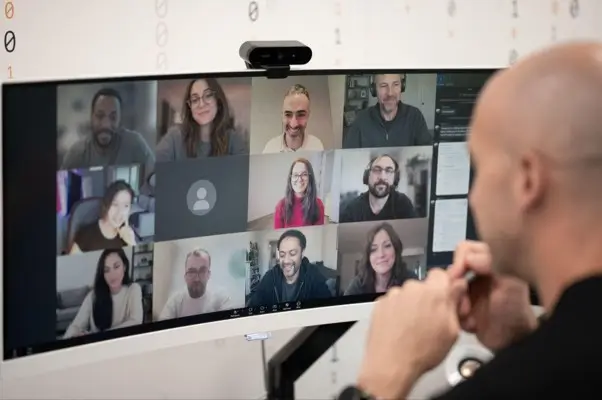
High-standard, but human
This is one of the biggest things I try to build into DSI.
High-standard, but human.
Students still need to do the work. They need to learn SQL, Python, Statistics, Machine Learning, GenAI, AWS, and the wider skillset that helps them stand out. They need to build proper projects, create a strong portfolio, improve their CV or resume, prepare properly for interviews, take feedback, iterate, and keep going.
But they don’t have to do it alone.
And they don’t have to do it in an environment where asking a question feels embarrassing, or where feedback feels like someone trying to prove they’re cleverer.
That is not how I want DSI to feel.
I want it to feel serious, practical, ambitious, and supportive.
Because I know those things can exist together.
I’ve worked inside some of the world’s biggest tech companies. I’ve built Data Science, Machine Learning, AI, and Computer Vision solutions in serious environments. I’ve screened and interviewed thousands of candidates. I know how competitive this field can be.
But I also know that people do their best work when they feel supported, not belittled.
Why this matters for students
A lot of people think the biggest challenge in learning Data Science or AI is the technical content.
And yes, the technical content matters.
But confidence matters too. Momentum matters. Having someone to ask when you’re stuck matters. Getting honest feedback from someone who understands the industry matters. Knowing you’re on the right track matters.
This is why DSI includes direct 1:1 support from me.
Not because students need someone to do the work for them, but because the right guidance at the right moment can save months of confusion.
It can help someone break through a plateau. It can help them realise they’re closer than they think. It can help them improve a project, strengthen a portfolio, sharpen their CV, prepare for an interview, or simply keep going when they’re doubting themselves.
That is the kind of support I wanted to build.
Not a faceless course. Not a cold, corporate learning platform. Not a place where students are left to figure everything out alone.
A high-standard, human environment for people who are serious about changing their careers.
Final thought
Walking away from Amazon stock was not an easy decision.
On paper, it probably looked like the wrong one.
But it was the right decision for me, because it pushed me towards work that felt more creative, more collaborative, more aligned, and ultimately more meaningful.
And in a very real way, it helped shape Data Science Infinity.
DSI exists because I believe ambitious people need more than content.
They need direction, support, honest feedback, and someone in their corner.
They need high standards, but they also need to feel like they can ask questions, make mistakes, improve, and grow without being made to feel small.
That is what I wanted to build.
And that is exactly what I’m still trying to do.
If you’re looking to move into the exciting and future-focused fields of Data Science, AI, and Analytics, join thousands of others just like you who got ahead of the competition and started with my free 60-minute career webinar.