
Everyone is saying you need to learn GenAI (read what 200+ hiring managers told me here).
Agents, LLMs, RAG, Claude Code, Codex, and whatever the newest tool or model is this week…
And, to be clear, they’re not wrong.
You should learn how to use AI. You should understand how these tools work. You should know where LLMs, RAG, prompting, agentic AI, and coding agents fit into the modern Data Science, Analytics, and AI workflow.
But here’s where a lot of people are getting this wrong.
The people who win long-term will not be the ones who only chase the latest tools.
They will be the ones who can use AI on top of strong Data Science fundamentals.
" Learn the AI tools, but build the fundamentals that make them useful."
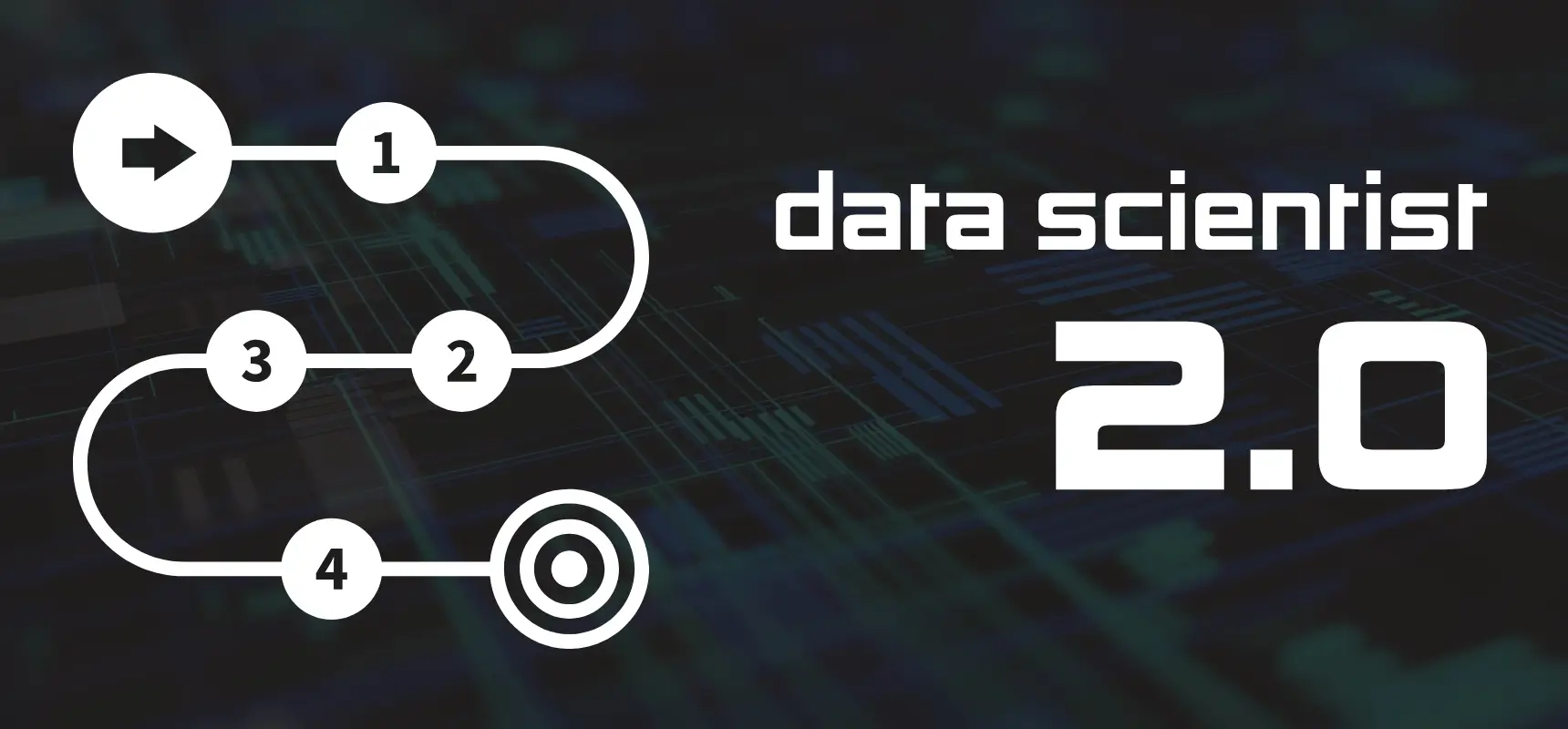
That is what I mean by the Data Scientist 2.0.
Not someone who ignores AI.
Not someone who panics about AI.
And not someone who thinks AI means they can skip the foundations.
The Data Scientist 2.0 is someone who understands data, models, decisions, business context, and modern AI tools well enough to bring them together in a way that actually creates value.
The mistake people are making right now
The biggest mistake I’m seeing right now is beginners chasing tools before judgement.
They see GenAI, agents, Claude Code, Codex, RAG, vector databases, cloud tools, automation workflows, and all the rest of it, and they think:
" This must be where I should start."
And I understand why.
It feels exciting. It feels current. It feels like the thing everyone is talking about.
But AI tools are not a substitute for understanding the work.
AI can help you write code faster. It can help you explore data quicker. It can help you build models, summarise documents, generate ideas, and speed up parts of your workflow.
But it can also help you make mistakes faster.
That’s the part people don’t always want to talk about.
If you don’t understand the fundamentals, you might not know whether the code is wrong, whether the model is overfitting, whether the data is messy, whether the analysis is misleading, or whether the output actually makes sense.
" AI can help you move faster. It can also help you make mistakes faster."
The difference is judgement.
And judgement comes from understanding.
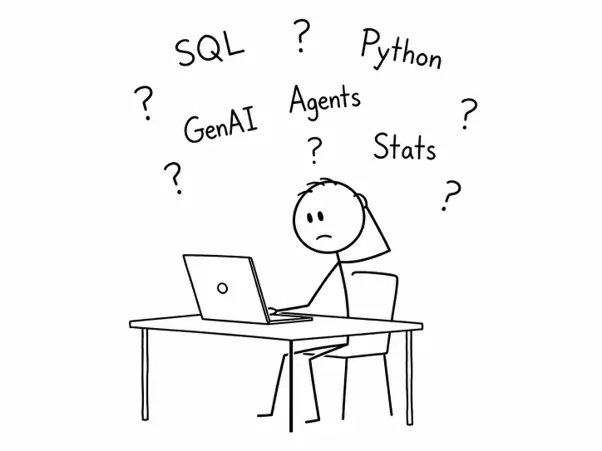
AI helps with tasks. You still own the thinking.
The hardest part of Data Science was never just writing code.
- It was knowing what problem to solve.
- It was knowing what data to use.
- It was knowing what to analyse.
- It was knowing whether the result made sense.
- It was knowing how to explain the result to a business.
- And it was knowing what should happen next.
AI can support parts of that process, but it does not remove the need for human thinking.
- You still need to frame the problem.
- You still need to judge the output.
- You still need to decide what matters.
- You still need to communicate the result.
- You still need to understand the business context.
That’s why the Data Scientist 2.0 is not just someone who knows how to prompt an AI tool. It’s someone who can combine technical skill, business thinking, communication, and AI fluency into something useful.
That is where the real advantage is.
The Data Scientist 2.0 Roadmap
For The GenAI Era
Learn the AI tools, but build the fundamentals that make them useful.
Download Your Copy
Start with data, not AI tools
The first part of the roadmap is simple.
Start with data. Because if you cannot get, clean, understand, and work with data, the newest AI workflow in the world will not save the project.
This means learning SQL properly. Not just knowing that SQL exists, but being able to query data, join tables, group results, filter records, work with dates, aggregate information, and extract useful answers from a database.
It also means learning Python. Again, not just copying code from an AI tool, but understanding the language well enough to clean data, reshape data, explore data, automate tasks, and build real workflows.
And it means learning how to organise your work properly.
Tools like GitHub matter because they help you manage code, track changes, collaborate, and show credible evidence of your work.
This is not the flashy part. But it is the part that everything else sits on.
Learn statistics so you can trust the output
Statistics is another area people are tempted to skip. And I get it. It can feel dry, abstract, and a bit intimidating if it’s taught badly.
But if you want to work in Data Science, Analytics, or AI, you need to understand uncertainty, variation, evidence, and tradeoffs.
AI can produce confident answers. That does not mean those answers are correct.
Statistics helps you understand what is actually going on. It helps you know whether a result is meaningful, whether a difference matters, whether a pattern might just be noise, and whether you have enough evidence to make a decision.
This is also where A/B Testing becomes so powerful.
Because the point of Data Science is not just to produce interesting numbers. The point is to help people make better decisions.
A/B Testing connects analysis to action. It helps you test ideas properly, measure impact, and understand whether something actually worked.
That kind of thinking does not become less important in the GenAI era.
It becomes more important.
Learn Machine Learning as a workflow
Machine Learning is not just picking an algorithm. That is another common mistake.
A real Machine Learning workflow involves framing the problem, preparing the data, choosing the right features, avoiding leakage, selecting the right model, choosing the right metric, validating performance, and understanding the tradeoffs.
That workflow matters more than ever.
Because AI tools can help you code a model quickly, but they cannot automatically tell you whether you’ve framed the problem properly.
- They cannot magically know whether the target variable makes sense.
- They cannot always spot whether future information has leaked into your training data.
- They cannot decide whether the model is actually useful for the business.
This is why the Data Scientist 2.0 still needs to understand Machine Learning properly.
Not just the syntax.
- The workflow.
- The reasoning.
- The decisions.
- The mistakes to avoid.
That is how you move from playing with models to building things that companies can actually use.
Then layer on GenAI
Once the foundations are there, GenAI becomes much more powerful.
This is where tools like LLMs, prompting, RAG, coding agents, and agentic AI can become a genuine force multiplier.
- You can use them to move faster.
- You can use them to explore ideas.
- You can use them to help write and debug code.
- You can use them to build AI-powered applications.
- You can use them to connect data, documents, and decision-making in new ways.
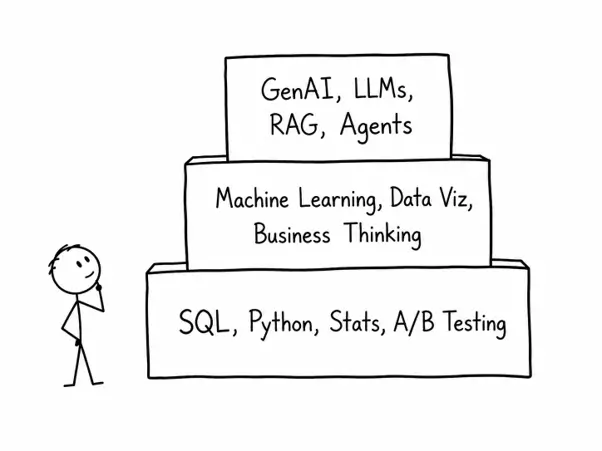
But the key phrase is layer on top.
GenAI should not replace the foundation. It should sit on top of it. That is where a lot of the opportunity is now.
The strongest people in the market will not be the ones who only know traditional Data Science, and they will not be the ones who only know AI tools either.
They will be the ones who combine both.
Cloud matters too
The modern Data Scientist 2.0 also needs some awareness of the cloud.
Because real Data Science and AI work does not only happen on your laptop.
- Data lives in databases.
- Models need to be trained, stored, deployed, and monitored.
- Applications need to run somewhere.
- AI systems often need storage, compute, APIs, permissions, and production awareness.
That does not mean everyone needs to become a cloud engineer.
But having practical cloud understanding gives you a serious advantage.
- It helps you understand how real systems fit together.
- It helps you move beyond notebook-only work.
- And it helps you build projects that feel much closer to what happens in the real world.
Projects are where it all comes together
One of the biggest differences between learning and becoming employable is proof.
- You can say you know SQL.
- You can say you know Python.
- You can say you understand Machine Learning.
- You can say you’ve learned GenAI.
But employers need to see evidence.
That is where projects matter.
Good projects show that you can take a problem, work with data, apply the right techniques, explain your choices, and produce something useful.
They also give you something to talk about in interviews. This is hugely important.
Because in the hiring process, it is not enough to have skills sitting quietly in the background. You need to be able to present those skills clearly, tell the story of your work, explain your thinking, and help the interviewer understand why your project matters.
That is why the roadmap does not end with tools.
- It includes projects.
- It includes storytelling.
- It includes interview preparation.
Because getting hired is not just about what you know.
It is about proving it.
The order matters
This is the part I really want to emphasise.
The order matters.
If you start by chasing every new AI tool, the whole thing can quickly become overwhelming. You end up jumping between tutorials, frameworks, products, and buzzwords without ever really building the base that makes it all useful.
A better route is:
- SQL and data foundations.
- Python and data cleaning.
- Statistics and A/B Testing.
- Tableau and Data Storytelling.
- Machine Learning.
- Deep Learning.
- AWS and the cloud.
- Generative AI and LLMs.
- Projects.
- Interview preparation.
That does not mean you can never look at AI until you’ve mastered everything else.
Of course not. But it does mean you should understand the foundations you’re building towards, and why each layer matters.
The goal is not to compete with AI. The goal is to use AI while understanding data, models, decisions, and business context better than the tool does.
The Data Science Skills Employers Still
Care About In The AI Era
GenAI matters. But the people who win are the ones who pair it with strong fundamentals.
Download Your Copy
What this means for you
If the AI noise is making the Data Science path feel confusing, you’re not alone. A lot of people are looking at the field right now and wondering where to start.
Should I learn Python?
Should I learn SQL?
Should I learn Machine Learning?
Should I learn GenAI?
Should I learn agents?
Should I learn cloud?
Should I just use AI and skip the rest?
My answer is simple. Do not skip the foundations. Learn the core skills properly, then layer the modern AI tools on top.
That is the Data Scientist 2.0 roadmap.
It gives you the best of both worlds: the judgement to know what you’re doing, and the AI fluency to move faster, build more, and stay relevant in a field that is evolving quickly.
Final thought
AI is not making Data Science pointless. It is changing what strong candidates look like.
The people who stand out will be the ones who understand the fundamentals, build real projects, communicate clearly, and use AI intelligently.
Not as a shortcut around learning. As an accelerator on top of it.
That is the opportunity.
And if you build the right skills, in the right order, you are still early.
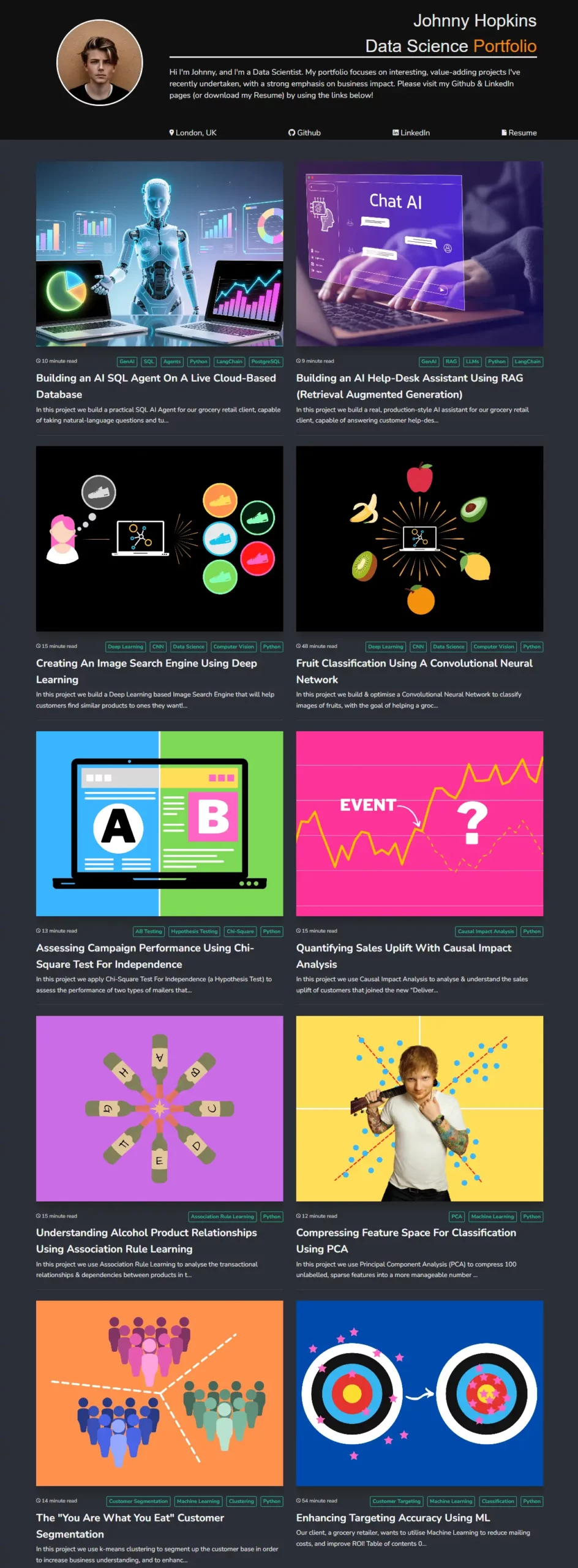
Want to learn Data Science, Analytics, and AI in the right order? Explore the full Data Science Infinity curriculum and see how DSI helps you build the skills, projects, portfolio, and confidence to stand out in the GenAI era.